

Last Updated: November 4, 2026
Quick Summary
2 is the smallest prime and the only even prime, since every even number greater than 2 is divisible by 2 and so has at least three divisors. Its divisors are 1 and 2, and no other positive integer divides it without a remainder.
- Testing 2 for primality takes one step because the square root of 2 is roughly 1.414, leaving no integer to test.
- A set with 2 elements has exactly 4 subsets, a count that follows from 2 raised to the power of 2.
- In base-2 the number is written as 10, the first place where the radix and the digit coincide.
- Binary won because two states are the easiest to distinguish reliably in physical hardware.
- Every construction contract is a two-party instrument, and every claim is a disagreement between two readings of one clause.
Table of Contents
- Why the Number 2 Sits at the Centre of Mathematics
- Is 2 a Prime Number?
- Properties of the Number 2
- The Number 2 Meaning Across Cultures and Disciplines
- 2 in the Binary System and Modern Technology
- How We Perceive Duality: The Cognitive Side of Two
- Where the Number 2 Shows Up in Business and Project Delivery
- Questions to Ask Before You Rely on a Number
- Frequently Asked Questions
Why the Number 2 Sits at the Centre of Mathematics
The number 2 is the smallest prime and the only even prime, a distinction that makes it foundational to number theory rather than a footnote in it.
Below, we cover why 2 is prime, what its properties are, how it behaves in base-2 arithmetic, and where duality shows up in project delivery. The mathematical definition matters less than what follows from it: 2 is the hinge on which parity, prime factorisation and binary logic all turn.
Is 2 a Prime Number?
Yes, 2 is a prime number. A prime is a natural number greater than 1 with exactly two positive divisors: 1 and itself (Prime Numbers and Composite Numbers). The divisors of 2 are 1 and 2, and no other positive integer divides it without a remainder, so 2 satisfies the definition cleanly.
That answer is short. The consequences are not.
Why 2 Is the Only Even Prime
Every even number greater than 2 is divisible by 2, which gives it at least three divisors and disqualifies it from being prime. Since 2 is itself even, it occupies a category of one: the even prime. This is not a quirk to memorise but a structural fact. It means 2 is the only prime that can never appear twice in a prime factorisation of an odd number, and the only prime whose square is even.
How to Test Whether 2 Is Prime
Testing 2 for primality takes one step. Check whether any integer between 2 and the square root of 2 divides it evenly. The square root of 2 is roughly 1.414, so there is no integer in that range to test.
For larger numbers, the same trial division method applies up to the square root, which is why primality testing scales poorly by hand and well by algorithm. The number 2 is the trivial case that anchors the method.
Properties of the Number 2
The properties of the number 2 flow from its position as the first prime and the base of binary arithmetic. It is a natural number, a cardinal number and an ordinal number, sitting in second position in any ordered sequence. It is the smallest positive integer that is not 1, and the only one whose reciprocal, one half, is also a terminating decimal in base-10.
Factors, Parity and Prime Factorisation
The factors of 2 are 1 and 2. Its prime factorisation is simply 2, making it the only number whose factorisation is a single prime. Parity is where 2 does its heaviest lifting: a number is even if 2 divides it, odd if it does not. That single rule sorts the entire set of integers into two classes.
- Summation: 2 is the sum of 1 and 1, the first non-trivial addition in arithmetic.
- Set theory: a set with 2 elements has exactly 4 subsets, a count that follows from 2 raised to the power of 2.
- Number theory: 2 is the first prime in the sequence, and every even number factors through it.
- Geometry: two points determine a line, which is why the number appears at the base of Euclidean construction.
- Combinatorics: the number of permutations of two distinct items is 2, the smallest non-trivial case.
The Historical Development of the Numeral
The symbol we write as 2 has a history that most definitions skip. Early numeral systems often used two strokes or two marks for the quantity, and the modern glyph descends from Brahmi forms used in India before the Common Era, transmitted through Arabic mathematics into European notation. The shape is not arbitrary: it evolved through scribal hands over centuries, which is why related numerals in different scripts still share structural features.
Two in Different Bases
In base-2, the number is written as 10, which is the first place where the radix and the digit coincide. In base-3 it is written as 2, and in any base greater than 2 it remains a single digit. This is a small point with a large consequence: the numeral 2 is the largest digit that can appear in base-3 and above, and it disappears entirely from the digit set in base-2.
Why the Properties Matter
These properties are not trivia. Parity underpins error detection in digital transmission, where a single check bit can flag an odd number of flipped bits. Prime factorisation underpins cryptography, and the fact that 2 is the only even prime is the reason every even number greater than 2 is composite.
Readers comparing small-number properties often want to see how 2 differs from the next prime, and our guide to the number 3 sets out that contrast directly.
The Number 2 Meaning Across Cultures and Disciplines
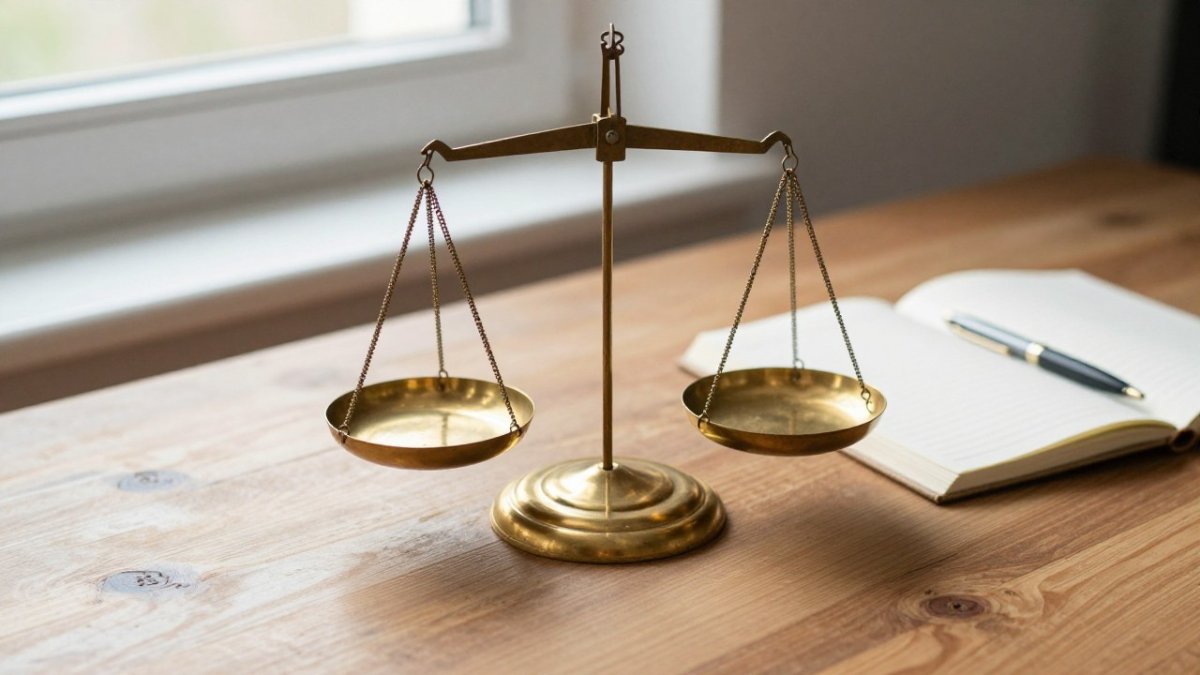
The number 2 meaning varies sharply by tradition, but the common thread is duality: paired opposites that define each other. What most summaries miss is that the pairing is not read the same way everywhere. Some traditions treat two as the number of relationship and balance; others treat it as the number of division and conflict.
Duality in Eastern Traditions
In Chinese philosophy, the pairing of yin and yang describes complementary forces rather than a contest: each contains the seed of the other, and neither is meaningful alone. The classical text commonly translated as the Book of Changes builds its entire system of hexagrams on combinations of two kinds of line, a structure that treats duality as the engine of change rather than a static split.
Duality in Western Thought
Western philosophy has tended to read two as the point where unity breaks. Pythagorean thought treated the number as the first departure from the one, associated with division and the female principle in a scheme that modern readers rightly find dated but which shaped later symbolism. Hegel’s dialectic of thesis and antithesis is the clearest formal statement of the pattern: two opposed positions generate a third, and the tension is productive rather than destructive.
Two in Myth and Folklore
Mythology is full of paired figures whose meaning depends on the pairing: Castor and Pollux, Romulus and Remus, the twin founders and the twin rivals. The recurrence is not accidental. Twins let a story explore sameness and difference at once, which is why the motif appears across unrelated cultures. Folk sayings carry the same structure: “two sides to every story”, “it takes two to tango”, “two’s company, three’s a crowd”.
The Linguistic Layer
English carries the concept in several distinct roots. Two and twin descend from the same Germanic source, while dual, duo and duet arrive through Latin. Pair comes through Old French, and couple through Latin copula, a bond.
For a fuller treatment of the symbolic representation and applications, our page on the number 2 meaning and significance covers the cultural material in more depth.
2 in the Binary System and Modern Technology
The binary system is base-2 notation, and it is the reason 2 underpins modern technology. Every digital signal resolves to one of two states, typically written 0 and 1, and every byte, instruction and file is a sequence of those two digits. The mathematical logic is simple: two states are enough to encode any quantity given enough positions.
What most explanations skip is why base-2 won. Two states are the easiest to distinguish reliably in physical hardware, which makes binary the most error-resistant encoding available at scale. The numeral 2 therefore does double duty: it is a mathematical object and the radix of the system running on the device you are reading this on.
How We Perceive Duality: The Cognitive Side of Two
Cognitive perception of duality is the human tendency to sort the world into pairs before any formal training. Infants distinguish same from different before they count.
That efficiency has a cost. Binary framing hides the middle ground, and in commercial settings the middle ground is usually where the actual answer sits.
The habit is worth naming because it shapes decisions.
Where the Number 2 Shows Up in Business and Project Delivery
Duality structures commercial relationships more than most people notice. Every construction contract is a two-party instrument. Every claim is a disagreement between two readings of one clause. Every project has a plan and a reality, and the gap between the two is where risk accumulates.
The tension between the map and the territory is the cleanest example: a plan is a two-dimensional guide to a three-dimensional reality, and getting stuck on the map is a recognised execution risk. Our article on the map versus reality in project execution examines that gap directly. Teams applying these ideas to controls can also download the construction planning and project controls checklist as a practical starting point.
| Two-State Framing | What It Hides | Better Question |
|---|---|---|
| On budget vs over budget | Which work packages are driving the variance | Where is the variance concentrated? |
| Claimant vs respondent | The shared facts both parties accept | What is genuinely in dispute? |
| On time vs late | Float consumed in specific activities | Which activities are critical now? |
| Plan vs actual | Why the two diverged | What changed, and when? |
Questions to Ask Before You Rely on a Number
A number is only as good as the definition behind it. Before you build a decision on any figure, ask what exactly it counts, who produced it, and what it excludes.
Watch out: the most common error is treating a two-state summary as a complete picture.
Separating what a number claims from what it can actually support is a recurring problem in project delivery.
Frequently Asked Questions
Is 2 a prime number?
Yes. A prime number has exactly two positive divisors: one and itself. The number 2 divides evenly only by 1 and 2, so it qualifies. It is also the smallest prime and the only even one, because every other even number is divisible by 2 as well as by 1 and itself. That single fact makes 2 the exception that proves the rule in number theory.
Why is 2 the only even prime number?
An even number is divisible by 2 by definition. For a number to be prime it must have no divisors other than 1 and itself. Any even number larger than 2 therefore has at least three divisors: 1, 2 and the number itself. So 2 is the only even number that clears the prime test, and every other even number is composite.
What are the properties of the number 2?
The number 2 is the first prime, the only even prime, and the base of the binary system. Its positive factors are 1 and 2. It is a natural number, a cardinal number and an integer, and it sits between 1 and 3 on the number line. In set theory it describes the size of any set containing exactly two elements, and in computing it underpins base-2 notation.
What does the number 2 mean in everyday life?
The number 2 usually signals a pair, a contrast or a second position. You see it in deuce in tennis, in duo and couple in language, and in binary code where every digital signal reduces to two states. In business it often marks a comparison: two options, two parties to a contract, two sides of a dispute. That framing shapes how decisions get made.
Numbers decide arguments in complex projects, and the ones that survive scrutiny are the ones built on evidence rather than labels. CDI Experts brings recovery teams, evidence-based claims support and dispute resolution to owners and contractors who need the real position, not the reported one. Get started with CDI Experts and put your commercial position on a footing that holds.


