

Table of Contents
- Why Construction Disputes Escalate in 2026
- Construction Dispute Prevention Strategies for Complex Projects
- The Construction Dispute Resolution Process: Step by Step
- Construction Dispute Mediation: When Facilitation Works
- Adjudication, Arbitration and Litigation Compared
- Using a Construction Expert Witness Effectively
- Choosing the Right Dispute Resolution Strategy
- Frequently Asked Questions
Last Updated: October 5, 2026
Why Construction Disputes Escalate in 2026
Construction dispute resolution strategies 2026 start with understanding why claims spiral. On complex infrastructure and energy projects, disputes build quietly through unresolved variations, late certifications and mounting delay costs until a trigger, often a payment default or rejected extension of time claim, forces the issue.
As projects grow larger, more heavily financed and more dependent on tight coordination, the margin for contractual ambiguity shrinks. Key forces drive escalation:
- Scope creep and design changes that were never properly priced or documented
- Delays and scheduling conflicts where responsibility is genuinely shared across trades
- Risk-sharing strategies that push disproportionate risk onto contractors who then claim back
Dispute management is now a core commercial discipline, firms that treat it that way resolve claims faster and cheaper.
Construction Dispute Prevention Strategies for Complex Projects
Prevention beats cure, and on multi-billion dollar capital projects the savings are enormous. Dispute avoidance means designing contracts, governance and reporting so conflicts are defused before they harden into formal claims. The most effective construction dispute prevention strategies rest on three pillars: contract clarity, disciplined documentation and early intervention.
Early Warning Signs and Contract Clarity
Most disputes leave a trail. Ignoring early warning signs because raising them feels adversarial is a mistake, flagging a risk early protects the relationship.
Watch for these indicators:
- Repeated verbal instructions that never appear in writing
- Variations proceeding without a signed instruction or agreed rate
- Site records and progress claims that tell different stories
Contract clarity is the other half. Ambiguity in scope definitions, time bars, notice periods and payment terms is where disputes are born. Under the Security of Payment legislation guidance, strict timeframes govern payment claims and responses, and missing a notice deadline can forfeit a valid entitlement.
Run a “dispute dry run” at contract award. Pick the three most likely conflict scenarios on the project and trace how each would be handled under the contract clauses. If you cannot find a clear answer in the drafting, you have found a gap worth fixing before mobilisation.
The Construction Dispute Resolution Process: Step by Step
The construction dispute resolution process is a structured escalation path, not a single event.
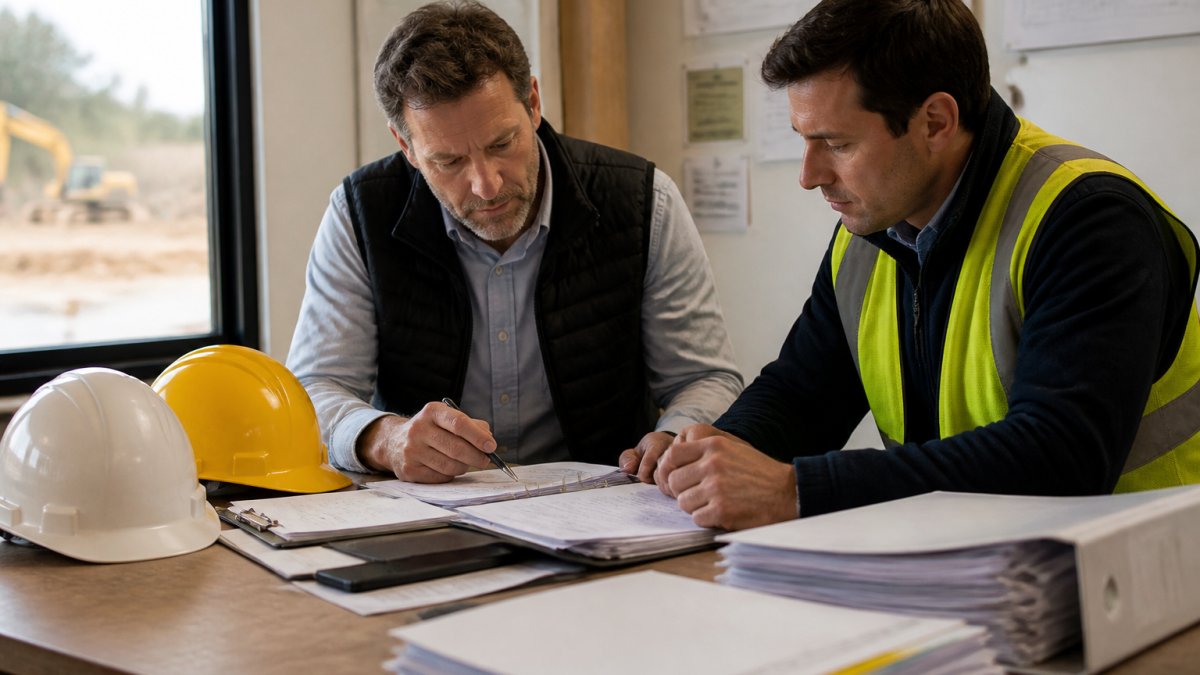
Step 2: Assemble the evidence. Gather contemporaneous records: site diaries, correspondence, meeting minutes, cost records and programme updates.
Step 3: Quantify. Build a defensible claim for time and cost, separating cause and effect.
Step 4: Negotiate. Attempt resolution by agreement before escalating.
Step 5: Escalate. Move to mediation, adjudication, arbitration or litigation as the contract and commercial reality dictate.
Preserving Evidence and Serving Notices
Evidence preservation is where strong claims are won and weak ones die. Contractual obligations usually require formal notice within set periods, and courts and adjudicators place heavy weight on contemporaneous documentation. A claim reconstructed months later from memory carries far less weight than one supported by daily records.
The table below sets out the typical sequence, records to preserve at each stage, and escalation triggers.
| Stage | Key Action | Records to Preserve | Typical Timing | Escalation Trigger |
|---|---|---|---|---|
| Event occurs | Log it in site diary and notify in writing | Site diary, photographs, weather records, correspondence | Within days | Cost or delay impact becomes apparent |
| Notice served | Confirm contractual basis and reserve rights | Copy of notice, proof of service, contract clause | Per contract time bar | No response within the contractual response period |
| Evidence assembled | Collate records, cost and programme data | Meeting minutes, RFI responses, variation instructions, cost records, programme updates | Weeks | Gaps in the record that cannot be filled |
| Claim quantified | Build cause-and-effect analysis | Delay analysis, quantum report, expert input | Weeks to months | Quantum exceeds the value of continuing negotiation |
| Negotiation | Meet, exchange positions, seek agreement | Position papers, without-prejudice correspondence | Ongoing | Positions entrenched or trust collapses |
| Formal process | Mediation, adjudication, arbitration or litigation | Full claim file, expert reports, witness statements | Per contract or statutory timeframe | Binding outcome required or time bar approaching |
Practical Evidence-Preservation Rules
A few habits separate a claim that stands up from one that does not:
- Write it down the same day. Site diaries, delay logs and cost records should be completed contemporaneously, not reconstructed at claim time.
- Keep the unhelpful records too. Selective disclosure damages credibility; adjudicators and courts notice a suspiciously one-sided record.
- Preserve metadata. Emails, timestamps and version histories establish when a party knew of an event, often decisive on time bars.
Digital Tools for Evidence and Early Warning
Project platforms, change-tracking systems and schedule analytics now do much of the evidence-preservation work automatically, creating a contemporaneous record as a by-product of normal administration. AI-assisted document review can surface patterns, repeated verbal instructions, unresolved RFIs, growing cost gaps, that signal an emerging dispute before it hardens. The value is the discipline it enforces: if the record is complete and current, the dispute is easier to resolve on the merits.
Construction Dispute Mediation: When Facilitation Works
Construction dispute mediation is a facilitated negotiation in which a neutral third party helps the parties reach their own agreement.
Mediation is not a sign of weakness, it is often the cheapest and fastest route to a commercial outcome. Where a dispute is about money and timing rather than legal principle, mediation frequently resolves it in a fraction of the time and cost of arbitration or litigation.
Mediation suits disputes where both parties still have something to gain from the ongoing relationship. When the relationship is already over and the only question is who pays, go straight to a binding mechanism.
Adjudication, Arbitration and Litigation Compared
Choosing between binding mechanisms is a commercial decision, not just a legal one. Adjudication is a fast, interim binding process common in construction, designed to keep cash flowing. Arbitration is a private, binding process where the parties appoint the decision-maker, often for technical expertise. Litigation is a public, binding process before a court, with full procedural rights and appeal avenues.
| Mechanism | Binding? | Speed | Relative Cost | Best For |
|---|---|---|---|---|
| Negotiation | No | Fastest | Lowest | Preserving relationships |
| Mediation | No | Fast | Low | Settling money and timing disputes |
| Adjudication | Interim | Fast | Moderate | Keeping cash flow during a project |
| Arbitration | Yes | Moderate | High | Technical, private disputes |
| Litigation | Yes | Slowest | Highest | Precedent and enforceability |
Costs, Timelines and Proportionality
Proportionality, the cost of resolving a dispute should bear a sensible relationship to what is at stake, is the single most useful test when selecting a mechanism.
Timelines matter just as much. Adjudication is built for speed; litigation can run for years through appeals. The decision should be driven by the value of the claim, the strength of the evidence and the strategic importance of the relationship.
Using a Construction Expert Witness Effectively
A construction expert witness provides independent, technical opinion to a tribunal on matters such as delay, quantum, defects or standard of work. The most valuable expert evidence is narrowly scoped, clearly reasoned and grounded in the contemporaneous record.
To get the most from an expert:
- Engage them early, while evidence is still recoverable
- Define the questions precisely and keep them within the expert’s discipline
- Give them full access to records, including the unhelpful ones
The difference between persuasive and damaging expert evidence comes down to discipline: a tight, well-documented opinion on a single contested issue beats a sprawling report covering everything.
Choosing the Right Dispute Resolution Strategy
The right strategy matches the value at stake, the evidence you hold, the relationship you need and the time you can afford. No universal answer exists, but a decision framework removes guesswork. The framework below is built around five variables: speed, cost, confidentiality, enforceability and relationship impact.
A Five-Variable Decision Framework
Score each mechanism against the variables that matter to your dispute. The table below is a starting position, not a rule, your contract, the value at stake and the strength of your records will shift the weighting.
| Variable | Negotiation | Mediation | Adjudication | Arbitration | Litigation |
|---|---|---|---|---|---|
| Speed to outcome | Days to weeks | Weeks | Typically weeks under statutory timeframes | Months to a year or more | Often years, including appeals |
| Relative cost | Lowest | Low | Moderate | High | Highest |
| Confidentiality | Private | Private | Usually private, but a determination may be relied on in later proceedings | Private | Public |
| Enforceability | Contract only | Contract only | Interim binding; enforceable as a debt in many cases | Binding; enforceable under the international arbitration framework | Binding; full enforcement and appeal rights |
| Relationship impact | Preserves | Preserves | Can be adversarial but time-limited | Adversarial | Most adversarial |
Jurisdiction-Specific Rules and 2026 Changes
One of the biggest sources of uncertainty for readers is that the rules differ by jurisdiction. In Australia, security of payment legislation operates state by state rather than as a single national scheme, and the timeframes, thresholds and adjudication authorities differ accordingly.
A second 2026 consideration is the growing use of model clauses and standard forms that pre-select a dispute resolution path. Many major principals now require tiered escalation, negotiation, then mediation, then arbitration, before litigation.
Proportionality: The Test That Resolves Most Arguments
A practical rule of thumb many commercial managers apply is that the total cost of the process should not exceed a meaningful fraction of the amount in dispute. Where the claim is small and the evidence is strong, a well-prepared letter of demand and short negotiation often recover more, faster, than a formal process. Where the claim is large and the facts are contested, the cost of a properly resourced arbitration or litigation is usually justified by the size of the exposure.
A Worked Decision Path
Apply the framework in this order:
- Confirm the contractual path. Check for tiered dispute clauses, time bars and mandatory pre-action steps. These override your commercial preference.
- Quantify the exposure. Put a realistic number on the claim, including time-related costs, and compare it to the likely cost of each mechanism.
- Assess the evidence. Strong contemporaneous records support escalation; weak records favour settlement while you still have leverage.
- Test enforceability. If you need an enforceable outcome quickly, adjudication or arbitration usually beat litigation on speed. If you need a precedent or public ruling, litigation is the only route.
- Weigh the relationship. Ongoing relationships favour negotiation and mediation. Where the relationship is already over, the only question is who pays, and a binding mechanism is the better path.
The most expensive mistake in construction disputes is letting a contractual notice period lapse while you weigh your options. Missing a time bar can extinguish an otherwise valid entitlement entirely, regardless of the merits.
This is where specialist support changes outcomes. CDI Experts deploys recovery teams to stabilise underperforming projects and provides evidence-based claims support, drawing on deep experience across natural resources and infrastructure. With a track record of delivering over $3 billion in verified value, we protect profits and manage commercial risk from tender through to final account.
Frequently Asked Questions
What are the main ways to resolve a construction dispute?
Most construction disputes move through four mechanisms: negotiation and resolution by agreement, mediation, adjudication, and arbitration or litigation. In practice, parties often try direct negotiation first, then escalate to mediation or a binding third-party decision. Adjudication is common for payment disputes under security of payment legislation, while arbitration suits complex contractual claims. Litigation remains the fallback when other routes fail or when a precedent-setting outcome is needed.
How can construction disputes be prevented before they escalate?
Construction dispute prevention strategies start with clear contract clauses, defined scope, and disciplined documentation from day one. Early warning signs such as repeated variation claims, slow certification, or strained communication should trigger a structured review. Risk-sharing strategies, regular project coordination meetings, and transparency around costs and scheduling conflicts reduce the chance that a claim becomes a formal dispute. Addressing issues at project level before they escalate saves both time and legal costs.
When should you bring in an expert witness for a construction dispute?
Engage a construction expert witness once a dispute looks likely to move beyond internal negotiation, particularly if delay, quantum, or technical causation is contested. Early involvement helps preserve evidence, shape the claim narrative, and test the strength of your position before formal proceedings. In adjudication and arbitration, expert evidence often determines the outcome, so waiting until a hearing is scheduled can limit your options and weaken your case.
What evidence is needed to support a construction claim?
A strong construction claim relies on contemporaneous records: site diaries, progress photographs, meeting minutes, variation instructions, payment schedules, and correspondence showing notice was given. Delay and quantum claims typically need programme updates, cost records, and expert analysis linking events to loss. Documentation gathered in real time carries far more weight than records reconstructed after a dispute arises, which is why evidence preservation should begin the moment a claim is foreseeable.
Is mediation or arbitration better for a construction dispute?
Mediation suits disputes where both parties want to preserve the commercial relationship and control the outcome. It is faster, cheaper, and confidential, but non-binding unless a settlement is reached. Arbitration is binding and suits complex, high-value claims where a reasoned decision is needed. Many construction contracts require mediation before arbitration, so check your contract clauses. In practice, mediation resolves a large share of disputes before arbitration becomes necessary.
How does adjudication work for construction payment disputes?
Adjudication is a statutory process under security of payment legislation in each state and territory. A party serves a payment claim, the respondent issues a payment schedule, and if the amount is disputed, either side can apply for adjudication. An adjudicator decides within strict timeframes, often around 30 business days. The decision is binding on an interim basis, meaning it must be complied with even if the dispute later goes to arbitration or litigation.


