

Table of Contents
- Why Evidence Wins Construction Claims
- The Construction Claim Documentation Checklist Every Project Needs
- Building an Extension of Time Claim Template That Holds Up
- Security of Payment Act Claims: Getting the Process Right
- What Makes an Expert Witness Construction Report Persuasive
- Digital Evidence Management Systems and Evidence Preservation
- Frequently Asked Questions
Last Updated: September 25, 2026
Why Evidence Wins Construction Claims
Construction claims rarely fail because the argument was wrong. They fail because nobody could prove it. This guide from CDI Experts covers how evidence-based construction claims support works in practice, from the first site record to the final adjudication.
The Construction Claim Documentation Checklist Every Project Needs
A good construction claim documentation checklist covers six record types: contracts, programmes, site records, correspondence, cost records and notices. If any one is missing, the claim weakens.
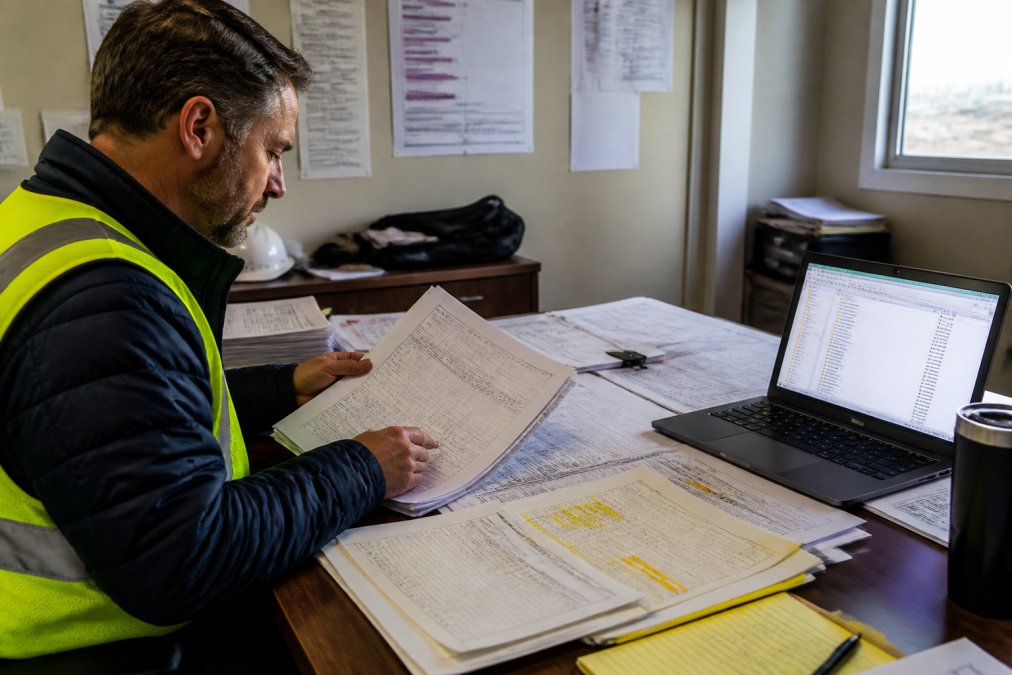
Then keep these records current:
- Signed contract and all amendments
- Baseline and updated programmes
- Daily site diaries and progress photos
- All correspondence, including emails
- Cost records, invoices and timesheets
- Every formal notice, with proof of delivery
Records That Carry Weight in Adjudication
Adjudicators favour records made at the time, not reconstructions. Contemporaneous documents beat hindsight every time.
Building an Extension of Time Claim Template That Holds Up
An extension of time claim template needs four parts: the delay event, the notice, the programme impact and the cost. Skip any part and the claim leaks value.
| Section | What to Include | Why It Matters |
|---|---|---|
| Delay event | Date, cause, description | Proves the trigger |
| Notice | Date served, method | Protects your rights |
| Programme impact | Before/after dates | Shows the delay |
| Cost | Labour, plant, preliminaries | Quantifies the claim |
Security of Payment Act Claims: Getting the Process Right
Security of Payment Act claims run on tight deadlines. A payment claim must meet the Act’s requirements, and a payment schedule must respond in time.
Get the basics right:
- Reference the correct Act for your project’s location
- State the amount claimed clearly
- Serve it by the method the contract allows
- Keep proof of when it was sent
Missing a payment schedule deadline can mean you owe the full claimed amount, even if the claim is inflated. Diary every deadline the moment a claim lands.
What Makes an Expert Witness Construction Report Persuasive
An expert witness construction report is persuasive when it is independent, reasoned and tied to the underlying facts. Opinion alone carries no weight, the report must show its working.
The structure a defensible report follows
A well-built report typically moves through these elements in order:
- Qualifications and experience, why this person is competent to opine on this issue
- Instructions, the questions asked, and any limitations on scope
- Documents and information relied on, a clear list, so the basis of the opinion is testable
- Methodology, the analytical approach used (for example, a recognised delay analysis method or a measured cost assessment)
- Fact versus opinion, clearly separated, so the reader knows what is established and what is inferred
- Reasoning, the logical path from evidence to conclusion, not just the conclusion
- Conclusions, direct answers to the questions asked, with any assumptions stated
- Declaration, confirmation of the expert’s duty and compliance with applicable practice notes
Fact, opinion and the reasoning in between
A common failure is a report that states conclusions confidently but never shows how the expert got there. Tribunals test the reasoning, not the confidence. If a delay analysis concludes that an event affected the critical path, the report should show the programme logic, the as-planned versus as-built comparison, and the assumptions applied. If a cost assessment claims additional preliminaries, the report should tie each cost to a record.
Independence in practice
Independence is not just a declaration at the end of the report. It shows in the choices the expert makes:
- Acknowledging facts that do not support the client’s position
- Flagging where the evidence is incomplete or ambiguous
- Declining to opine outside the area of expertise
- Updating or correcting the report if new evidence emerges
- Avoiding language that reads as advocacy rather than analysis
Concurrent evidence and the hot tub
In many tribunals and courts, experts from opposing sides may give evidence concurrently, sometimes described as a “hot tub” or expert conclave. In that setting, the expert’s ability to explain reasoning under pressure, concede points where the evidence supports it, and engage with the other expert’s method matters as much as the written report. A report that overstates the case makes the expert’s position harder to defend in person.
Instructing an expert well
The quality of the report depends heavily on the quality of the instruction. A brief that is vague, that asks leading questions, or that withholds relevant documents will produce a report that is easy to attack. Good instructions are specific, balanced, and supported by a complete document set, which is where the evidence preservation work described earlier pays off.
A persuasive expert report is not the one that argues hardest for your side. It is the one a tribunal can follow from evidence to conclusion without having to take anything on trust.
Common pitfalls to avoid
- Opining outside the expert’s field
- Relying on documents that cannot be produced or authenticated
- Failing to disclose assumptions
- Changing methodology between report and oral evidence without explanation
- Letting the instructing party draft or edit the substance of the opinion
Get these right and the report becomes a genuine asset in negotiation, adjudication or court. Get them wrong and it becomes a liability the other side will exploit.
Digital Evidence Management Systems and Evidence Preservation
The harder question is how a project team proves, months later, that a record is the same record it was on the day it was created. That is where digital evidence management systems (DEMS) earn their place.
What a DEMS actually does that a shared drive cannot
- Version control, every revision is retained, so you can show what a drawing or programme said on a specific date rather than what it says now.
- Immutable audit logs, access, edits and downloads are recorded and cannot be quietly altered.
- Metadata preservation, creation dates, authors and file properties survive transfer, which matters when a tribunal tests authenticity.
- Permission tiers, the right people can contribute without being able to overwrite finalised records.
- Retention rules, records are held for the period your contract and statutory obligations require, then disposed of on a defined schedule.
A common pattern is that teams adopt a DEMS late, after a dispute has already started, and then discover the early project records were never migrated. The system only helps if it is the system of record from day one.
A practical evidence preservation checklist
When a dispute becomes likely, a large variation is rejected, a delay notice is disputed, a payment schedule is challenged, freeze the record set immediately. Work through this list:
- Issue a documented litigation hold so no one deletes or overwrites records
- Lock finalised documents so they cannot be edited after the fact
- Export a full copy of the relevant record set to a separate, access-controlled location
- Preserve native file formats and metadata rather than PDF-only copies
- Capture the audit log for the period in dispute
- Retain proof of delivery for every formal notice (courier receipts, portal confirmations, email headers)
- Record who held which documents and when they were handed over
- Keep a register of what was preserved, by whom, and on what date
Set your DEMS to lock finalised records automatically. A record that cannot be edited after the fact is far harder to challenge, and the lock event itself becomes part of the evidence.
Where cross-border projects add complexity
For projects with an international element, evidence standards can differ from domestic practice. International arbitration rules and institutional guidelines often expect parties to agree on document production and to preserve electronically stored information in its native form. Different tribunals accept different formats and apply different tests for privilege and relevance, so check the applicable rules and any agreed procedural order early, ideally before the first notice is served, not after.
The human side of preservation
Evidence preservation is not only a technical exercise. The psychology of construction disputes matters: people dig in when they feel unheard, and they become defensive when they sense a record is being built against them. A transparent, evidence-led approach, sharing the factual record, separating fact from argument, and documenting positions calmly, lowers the temperature and keeps the door open to settlement.
Frequently Asked Questions
What constitutes sufficient evidence for a construction claim?
Sufficient evidence means contemporaneous records that show what happened, when, and what it cost. That typically includes daily site diaries, progress photographs, meeting minutes, correspondence, payment schedules and cost records. Under an evidence-led approach, each document must connect to a specific contractual obligation or event. Isolated documents rarely carry weight on their own; the strength comes from a consistent, dated trail that supports the factual evidence behind the claim.
How do expert witnesses support construction claims in dispute resolution?
An expert witness provides independent assessment of technical, delay or quantum issues that a tribunal cannot resolve alone. In an expert witness construction report, they set out the methodology, the factual evidence relied on, and their conclusions on matters such as delay analysis or quantum assessment. Their value lies in objectivity: a well-reasoned report gives the tribunal legal clarity and can narrow the issues in dispute, which often shortens the path to resolution.
What documentation is required to support an extension of time claim?
An extension of time claim template should capture the delaying event, the contractual clause relied on, the affected activities, and the link between the event and the critical path. Supporting records include the baseline project programme, updated programmes, site diaries, weather records, correspondence and notices. The template itself does not prove the claim; it structures the evidence so the delay analysis can be followed. Missing notices or late submissions are the most common reasons EOT claims fail.
How does the Security of Payment Act influence construction claims?
Security of Payment legislation gives contractors and subcontractors a statutory right to progress payments and a fast adjudication process for payment disputes. Claims must be served in the prescribed form and within strict timeframes, and the response must address the specific reasons for withholding payment. Because adjudication decisions are interim and enforceable, the quality of the supporting documentation at the time of the payment claim often determines the outcome more than the merits argued later.


