

Table of Contents
- Step 1: Define the Dispute and What the Expert Must Prove
- Step 2: Match the Right Discipline to the Claim
- Step 3: Check Expert Witness Qualifications in Construction
- Step 4: Vet Independence, Impartiality and Duty to the Court
- Step 5: Understand Expert Witness Fees in Construction
- Step 6: Brief the Expert and Gather the Evidence
- Step 7: Commission the Construction Expert Witness Report
- What an Independent Expert Opinion in Construction Should Deliver
- Frequently Asked Questions
Last Updated: October 17, 2026
Step 1: Define the Dispute and What the Expert Must Prove
Hiring expert witnesses for construction starts with one question: what must be proven, and to whom? An expert witness is a qualified professional who gives independent, evidence-based opinion to a court or tribunal on technical matters outside the judge’s knowledge.
CDI Experts sees this stage skipped more than any other. Teams rush to find a name before they have defined the claim. That is backwards.
Before you contact anyone, write down four things:
- The precise defect, delay or cost claim in dispute
- The technical question the expert must answer
- The forum: court, tribunal or arbitration
- The deadline for expert evidence
A vague brief produces a vague report. A precise one gives you a document that survives cross-examination.
Appointing an expert before you have defined the technical question is the most common and most expensive mistake we see. The expert investigates the wrong issue, the report misses the mark, and you pay twice.
Step 2: Match the Right Discipline to the Claim
A construction dispute can need several disciplines, and picking the wrong one wastes months. Match the discipline to the technical question, not to who you already know.
| Claim type | Likely discipline | Core question |
|---|---|---|
| Structural cracking or failure | Structural engineer | Is the design or the build at fault? |
| Water ingress and defects | Building surveyor | Does workmanship meet the standard? |
| Programme and delay | Delay analyst / quantity surveyor | What caused the delay and what did it cost? |
| Services and compliance | Services engineer | Does the installation meet the code? |
| Cost and quantum | Quantity surveyor | Is the claimed cost reasonable? |
Building disputes often combine two or three of these. A defect claim with a delay consequence may need both a building surveyor and a delay analyst.
Get the discipline right and the rest of the process gets easier. Get it wrong and no amount of good report writing will save the case.
Step 3: Check Expert Witness Qualifications in Construction
Expert witness qualifications in construction rest on two pillars: formal credentials and real industry experience. A chartered engineer with no site background can struggle to explain how a defect actually happened.
Look for:
- Current professional registration or chartership
- Direct experience in the relevant discipline and project type
- Prior experience giving expert evidence
- Familiarity with the relevant building standards and codes
- A track record of reports that have withstood scrutiny
Practical experience matters as much as letters after a name. A specialist who has supervised construction on similar projects will read a site differently from one who has only designed on paper.
Ask for examples of past expert reports. Ask whether they have given oral testimony. Ask which tribunals and courts they have appeared in.
Ask a candidate to walk you through one past dispute in detail, including how they handled a challenge to their opinion. How they answer tells you more about their suitability than any CV.
Step 4: Vet Independence, Impartiality and Duty to the Court
Independence is not optional. An expert’s paramount duty is to the court or tribunal, not to the party paying the invoice. In Australia this is not merely an ethical aspiration, it is embedded in the procedural rules and practice notes of the courts and tribunals that hear construction disputes, and it is tested hard during cross-examination.
The expert’s overriding duty is to assist the court impartially on matters within their expertise. That duty overrides any obligation to the party who engaged them or who pays their fees.
Run these checks before you appoint:
- No prior engagement with the other side on this project or a related matter
- No financial interest in the outcome beyond the fee for the engagement
- No existing relationship, personal, commercial or professional, that could be seen as bias
- Willingness to sign a declaration of independence and acknowledge the overriding duty to the court
- Comfort stating findings that hurt your own case
- No history of being repeatedly retained by the same party or lawyer in a way that suggests a cosy relationship
That last point matters. An expert who only ever agrees with the client is a liability, not an asset. Opposing counsel will find the pattern and use it. A long history of repeat instructions from one side is a classic line of attack on independence, even where the expert genuinely believes they are impartial.
Conflict-of-interest checks should be documented. Keep a written record of what you checked, when, and what you found, including any prior involvement with the project, the parties, or the other side’s advisers. If a challenge arises later, that record protects the evidence and shows the appointment was made on a proper basis.
An expert who has previously advised the other party on the same project, even on an unrelated issue, is a conflict risk that opposing counsel will exploit. Check project history, not just the current dispute.
Independence also has a practical dimension: the expert must be given the freedom to reach their own conclusion. If the brief is written to steer a particular answer, or if the expert is pressured to soften a finding, the report’s value collapses under cross-examination. Brief the expert on the questions, not the answers.
Step 5: Understand Expert Witness Fees in Construction
Expert witness fees in construction vary widely by discipline, complexity and the amount of evidence to review. Pricing depends on scope, so treat any fixed quote with caution until the brief is clear.
Common billing models include:
- Hourly rates for investigation, analysis and report writing
- Fixed fees for a defined scope, such as a single-issue report
- Stage-based fees across investigation, report and testimony
- Daily rates for hearings and conferences
Budget for more than the report. A realistic estimate covers site inspections, document review, report drafting, meetings with solicitors and barristers, and time on the stand. Testimony days and preparation for cross-examination often cost more than clients expect.
Ask each candidate for a fee estimate broken down by stage. Compare like for like. A lower headline rate can cost more if the expert needs twice as long to get up to speed.
The cheapest quote is rarely the best value. Compare total estimated cost across the whole engagement, not the hourly rate alone.
Step 6: Brief the Expert and Gather the Evidence
A strong brief saves money and time. Give the expert the documents, the technical question and the deadline in one clear package, but the sequence matters as much as the contents.
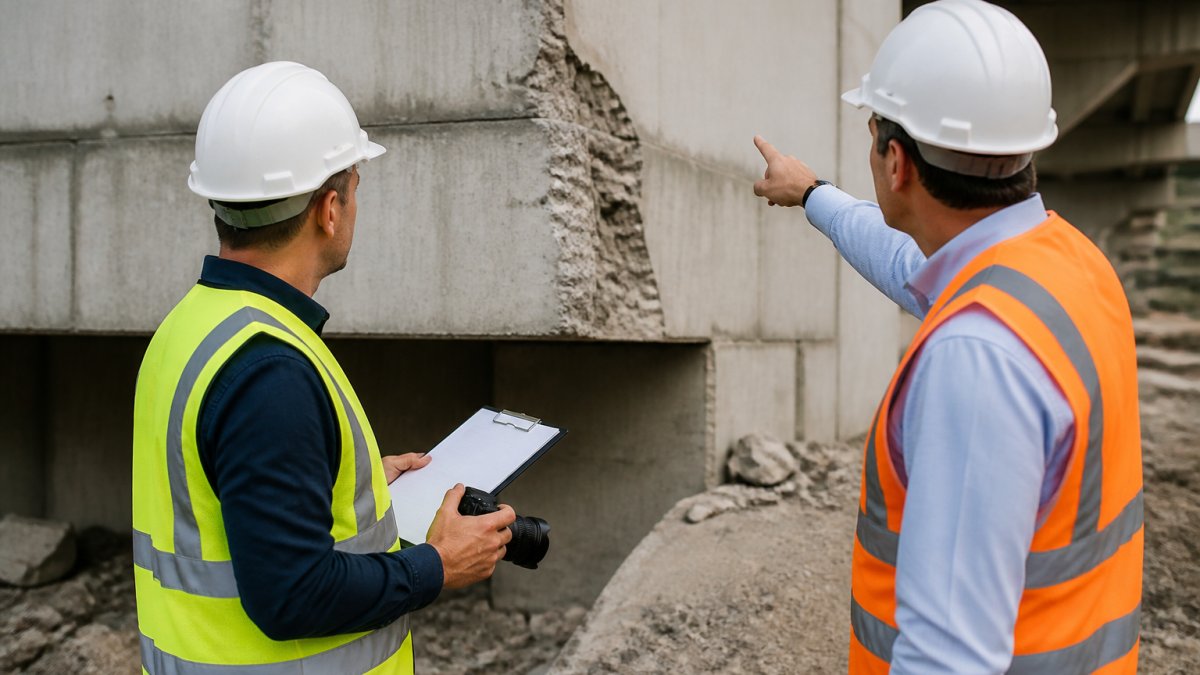
Define the scope before you brief. Write the questions the expert must answer as precisely as you can. Each question should be answerable with technical analysis, not opinion on legal fault.
Shortlist and verify before you engage. Confirm the candidate’s current registration or chartership, their direct experience with the relevant discipline and project type, and their prior experience giving expert evidence.
Formalise the engagement in writing. Set out the scope, the questions, the deliverables, the timetable, the fee basis and the expert’s acknowledgment of their duty to the court.
Your briefing pack should include:
- The pleadings or statement of claim
- Relevant contracts and scope of work
- Site records, photos and inspection reports
- Correspondence between the parties
- The specific questions the expert must answer
- Any procedural directions or timetable orders that affect the expert’s work
Evidence gathering is where cases are won or lost. A thorough site inspection, proper photography and careful document control build a foundation the report can stand on. Sloppy evidence gives opposing counsel an easy target.
Timing and availability drive the timetable. Good experts book out, so lock in dates early.
Ask each candidate for a fee estimate broken down by stage, investigation, report, and testimony, and confirm what is included. Compare like for like, and check whether site inspections, testing and meetings are charged separately.
Set a clear timetable and put it in writing. Confirm when the expert needs documents, when the inspection happens, when testing results are due and when the draft report is expected. Build in a review window before the final report is served. Availability is not a detail, it is a risk factor that decides whether the evidence lands on time.
Step 7: Commission the Construction Expert Witness Report
The construction expert witness report is the deliverable that carries the case. It must be clear, reasoned and strictly independent.
A sound report does four things:
- States the expert’s qualifications and instructions
- Sets out the facts and evidence relied on
- Gives a reasoned opinion on each question asked
- Declares independence and acknowledges the duty to the court
Write the questions for the expert carefully. Each one should be answerable with technical analysis, not opinion on legal fault. The expert addresses technical causation and standard; the lawyers argue the law.
Review the draft for clarity, not for a conclusion you like. If the finding is unwelcome, that is information you need before the hearing, not after.
At CDI Experts, our evidence-based claims support and dispute resolution work follows this same discipline: define the question, gather the evidence, and let the analysis speak. That approach is how we have helped clients protect profits and manage commercial risk across complex projects.
What an Independent Expert Opinion in Construction Should Deliver
An independent expert opinion in construction should give the court a clear, reasoned answer to a defined technical question, backed by evidence and free of advocacy. That is the whole purpose.
When you assess a report, check for:
- A direct answer to each question asked
- Reasoning that links evidence to conclusion
- Honest acknowledgement of limits and assumptions
- Language a non-specialist can follow
- No hint of partisanship
The best independent evidence does not just support your case. It helps the tribunal understand what actually happened on site. That clarity is what persuades.
Construction disputes rarely get simpler with time, and the quality of your expert evidence often decides the outcome. CDI Experts brings evidence-based claims support, dispute resolution and recovery teams to complex projects, backed by a track record of over $3 billion in verified value. We help project owners and contractors protect profits and manage commercial risk from first claim to final account. Get started with CDI Experts and put independent, defensible evidence behind your next dispute.
Frequently Asked Questions
How do I choose an expert witness for a construction dispute?
Start with the technical issue, not the CV. Identify what must be proven, such as defective workmanship, causation of delay or a valuation shortfall, then shortlist experts whose discipline matches. Check qualifications, current industry experience, prior report and testimony history, and whether they have any conflict with the parties. Ask how they handle instructions, timelines and fees before appointing. A short written scope and a conflict check are essential. The right expert explains the technical position clearly and stays within their area of competence.
What qualifications should a construction expert witness have?
Look for a recognised tertiary qualification in the relevant discipline, such as structural or civil engineering, building surveying or construction management, plus current professional registration or membership. Practical site experience matters as much as academic credentials: an expert who has supervised, designed or delivered comparable projects can explain what a reasonable standard of workmanship or supervision looks like. Formal expert witness training and a track record of reports accepted in court or tribunal proceedings are strong signals. Confirm the expert’s qualifications and experience in writing before engagement.
How much does a construction expert witness cost?
Fees depend on the scope, complexity, discipline and time required, so there is no single figure. Most experts charge hourly rates, with some offering fixed fees for defined tasks such as a preliminary assessment or a single report. Site inspections, document review, report drafting and testimony are usually billed separately. Budget for preparation time and potential cross-examination, not just the report. Request a fee proposal with an estimate and assumptions, and confirm how disbursements are handled. Pricing varies by matter, so ask for a quote tailored to your dispute.
When should I hire a construction expert witness?
Engage early, ideally as soon as a claim is foreseeable and before key evidence is lost. Early involvement lets the expert inspect defects while they are visible, secure records and photographs, and shape the technical case before positions harden. In many disputes an expert opinion also supports settlement discussions or mediation well before a hearing. Late appointment risks incomplete evidence, rushed reports and timetable pressure. If proceedings are on foot, check any directions or deadlines that govern expert evidence and appoint in time to meet them.


