

Last Updated: November 1, 2026
Quick Summary
To stabilize failing infrastructure, first diagnose whether the failure is driven by commercial and contractual triggers or physical and technical triggers, then run a rapid risk assessment to test whether recovery is feasible. Build a short stabilisation plan with named owners and a commercial strategy, mobilise a recovery team, and track leading indicators weekly.
- Commercial triggers include ambiguous scope, unbalanced risk allocation, delayed progress claim certification and cash flow pressure.
- A rapid risk assessment ranks each trigger by likelihood, financial exposure and schedule impact, and should take days, not months.
- Every stabilisation plan needs five elements, including a commercial strategy for claims and variations.
- Sequence physical works as geotechnical model first, ground treatment second, structural repair third, with verification testing throughout.
- Fund inspection and preventative maintenance first, and hold a contingency for emergency works.
Table of Contents
- Step 1: Diagnose the Infrastructure Project Failure Causes
- Step 2: Run a Rapid Risk Assessment and Feasibility Check
- Step 3: Build a Project Stabilisation Plan
- Step 4: Mobilise an Infrastructure Project Recovery Team
- Step 5: Set Up Project Performance Monitoring That Actually Flags Trouble
- Physical Stabilisation: Ground Remediation and Structural Reinforcement
- Climate Adaptation and Digital Monitoring: Where Recovery Plans Fall Short
- Engage CDI Experts to Stabilize Failing Infrastructure
- Frequently Asked Questions
Step 1: Diagnose the Infrastructure Project Failure Causes
When a major project starts slipping, the instinct is to throw resources at the visible problem rather than stabilize failing infrastructure. That rarely works.
Infrastructure project failure causes fall into commercial and contractual triggers, and physical and technical triggers.
A schedule overrun often gets blamed on weather, when the real trigger may have been a poorly drafted variation clause that left the contractor exposed.
Commercial and Contractual Triggers
Commercial triggers are the ones project directors most often under-diagnose.
A common mistake is treating a contractual dispute as a relationship problem to be managed informally. In practice, unresolved commercial risk compounds.
For a deeper treatment of these mechanisms, our guide on mitigating commercial risk in infrastructure walks through the practical controls that prevent commercial triggers from becoming project failures.
Physical and Technical Triggers
Physical triggers are easier to see and harder to fix. They include ground conditions that differ from the geotechnical model, structural defects discovered post-construction, subsidence and voided soils beneath foundations, and materials that fail to meet specification.
A frequent oversight is assuming a physical defect is isolated. Fissures in a concrete pier often signal a load-bearing capacity problem that extends well beyond the visible crack.
Step 2: Run a Rapid Risk Assessment and Feasibility Check
A rapid risk assessment is a structured, time-boxed review that ranks every identified failure trigger by likelihood, financial exposure, and schedule impact, then tests whether recovery is feasible within the remaining budget and program.
The feasibility check answers one question: can this project be stabilised, or does it need to be restructured? Our 7-step feasibility study method gives you the full sequence for running that check properly.
Start with a simple scoring approach:
- List every commercial and physical trigger identified in Step 1
- Score each for financial exposure (high, medium, low)
- Score each for schedule impact
The output is a ranked register, not a report. Speed matters more than polish at this stage.
Step 3: Build a Project Stabilisation Plan
A project stabilisation plan is a short, decision-focused document that sets out the recovery actions, owners, deadlines, and the commercial position the project is defending. It is not a re-baselined program.
What the Plan Must Contain
Every stabilisation plan needs five elements: a clear statement of the recovery objective, the ranked risk register from Step 2, named accountable owners for each action, a commercial strategy for claims and variations, and a reporting cadence tied to the monitoring in Step 5.
What most guides miss is the commercial strategy. A stabilisation plan that addresses only engineering and schedule will fail, because the money problem is usually what forces the technical problem into the open.
Every stabilisation plan needs five elements, each with a clear purpose.
| Element | What it provides |
|---|---|
| Recovery objective | Clear statement of the recovery objective |
| Ranked risk register | The ranked risk register from Step 2 |
| Accountable owners | Named accountable owners for each action |
| Commercial strategy | Strategy for claims and variations |
| Reporting cadence | Cadence tied to monitoring in Step 5 |
Step 4: Mobilise an Infrastructure Project Recovery Team
Infrastructure project recovery succeeds or fails on the calibre of the team assembled. The recovery team needs three capabilities: commercial and contracts expertise, technical and engineering assessment, and program controls.
Internal teams know the contracts, but they are often too close to the decisions that caused the failure.
For a detailed guide on assembling and deploying that team, see our resource on construction project recovery experts.
Step 5: Set Up Project Performance Monitoring That Actually Flags Trouble
Project performance monitoring is the practice of tracking leading indicators, not just lagging ones, so that emerging trouble is flagged before it becomes a variation or a dispute. Early detection allows leadership to pivot toward addressing project infeasibility before the structural or financial commitments become irreversible.
The fix is to track earned value against physical progress weekly, monitor claim and variation exposure as a live figure, and set explicit trigger thresholds that force escalation. Our breakdown of construction schedule analytics explains how analytics surface those early warnings.
Physical Stabilisation: Ground Remediation and Structural Reinforcement
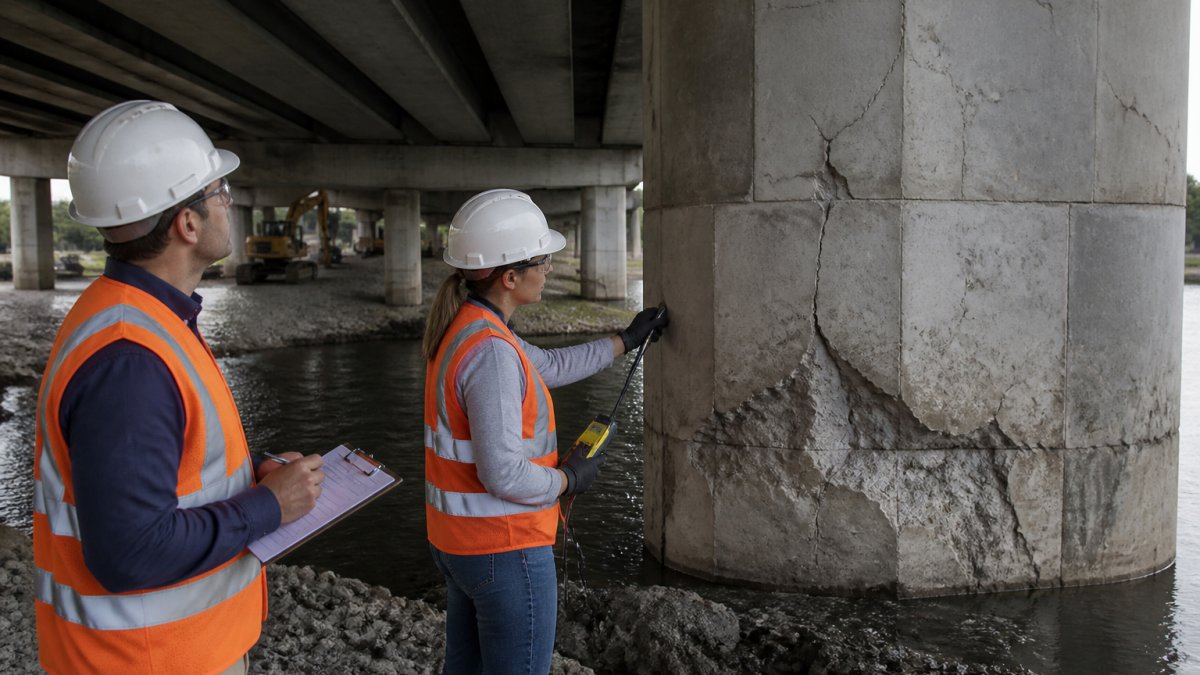
Sinkhole mitigation and voided soils treatment are specialist works. A common mistake is commissioning ground remediation without a proper geotechnical model, which risks treating the wrong zone.
Ground Improvement and Soil Stabilisation Techniques
Ground improvement is not a single method; it is a family of techniques selected against the geotechnical model, the load path, and the access constraints of the asset. The main options practitioners weigh are:
- Grouting and void filling. Cementitious or chemical grouts are injected to fill voids, compact loose soils, and lift settled slabs. Permeation grouting suits granular soils; compaction grouting suits voided or loose zones where displacement is needed rather than permeation.
- Resin injection. Expanding polyurethane resins are used for void filling and level correction beneath slabs and foundations. They are fast-setting, lightweight, and useful where access is tight or where minimal disruption is required. Resin injection is not a substitute for structural repair where load-bearing capacity has been lost.
- Mechanical stabilisation. Compaction, dynamic replacement, and vibro-compaction improve density and bearing capacity in granular soils. These are typically planned works, not emergency interventions.
A common pattern is to treat ground remediation as a single trade package. In practice, the sequencing matters: dewatering and drainage correction usually precede void filling, and structural repair follows ground treatment so that the repaired element is not re-loaded onto unstable ground.
Commissioning ground remediation without a proper geotechnical model is the most common cause of repeat subsidence. The model should define the treatment zone, the target bearing capacity, and the verification testing regime before any grout or resin is injected.
Bridge Inspection and Maintenance Protocols
Bridges and similar assets fail slowly before they fail suddenly. Inspection protocols are the mechanism that converts slow deterioration into planned intervention. Most asset owners work to a tiered regime:
- Routine inspections at regular intervals to record condition and identify defects.
- Detailed or principal inspections at longer intervals, often with access equipment, to assess structural condition and load capacity.
- Special inspections after events such as flooding, seismic activity, or impact damage.
Defect records should be tied to a condition rating so that deterioration can be trended rather than noted. A crack that is measured and dated is data; a crack that is photographed and filed is not.
Extending Asset Service Life
The cheapest stabilisation is the one you never have to commission. Extending service life rests on three levers: arresting deterioration early, managing loads within design assumptions, and maintaining drainage and protective coatings. Drainage is the most under-rated lever, water ingress drives much concrete and pavement deterioration, and correcting it is usually cheaper than repairing the damage it causes.
Budgeting for Emergency Stabilisation vs Planned Maintenance
The budgeting split matters more than most project directors admit. Emergency stabilisation is reactive, priced at a premium, and disruptive. Preventative maintenance and inspection protocols spread the same spend across the infrastructure lifecycle at lower cost and lower risk.
The practical rule: fund inspection and preventative maintenance first, and hold a contingency for emergency works. Projects that skip the first line pay far more for the second.
Physical stabilisation is a sequence, not a purchase: geotechnical model first, ground treatment second, structural repair third, and a verification testing regime throughout. Skipping the model is how projects pay twice for the same defect.
Climate Adaptation and Digital Monitoring: Where Recovery Plans Fall Short
Two gaps sink otherwise sound recovery plans. The first is environmental adaptation: recovery plans rarely account for changing climate loads on drainage, foundations, and coastal assets. Resilience has to be designed in, not retrofitted.
The second is digital twin and IoT monitoring. Real-time sensor data on structural movement and load can flag deterioration long before a visual inspection would. Most recovery plans still rely on periodic manual checks.
These are angles that are easy to overlook, and they are often where the difference between a stabilised asset and a repeat failure is decided.
Climate Change Adaptation Strategies for Failing Assets
Most recovery plans are built against the historical design envelope. That is the wrong baseline for an asset expected to serve another 30 to 50 years.
The practical adaptation measures fall into four groups:
- Hydraulic capacity. Upsizing or re-profiling drainage, adding detention or infiltration capacity, and raising freeboard on culverts and stormwater assets. Drainage failure is the most common climate-related trigger for pavement and foundation deterioration.
- Foundation and earthworks resilience. Improving erosion protection, managing moisture variation in reactive soils, and designing for increased frequency of wet-dry cycling. Reactive clay movement is a significant driver of subsidence and structural cracking.
- Coastal and flood-exposed assets. Reviewing scour protection, raising critical equipment above revised flood levels, and planning for managed retreat or relocation where protection is not viable.
A common pattern is to treat adaptation as a capital works program separate from stabilisation. In practice, the cheapest time to add adaptation capacity is during the stabilisation works themselves, while access, plant, and approvals are already in place.
When scoping stabilisation works, ask the geotechnical and structural engineers to test the design against a forward climate scenario, not just the historical record. The marginal cost of adding capacity during the works is usually far lower than a later retrofit.
Digital Twin and IoT Monitoring in Practice
A digital twin is a live model of the asset that is updated with sensor data, inspection records, and maintenance history. In a recovery context, it does three things that periodic inspection cannot:
- Trends movement over time. Tiltmeters, strain gauges, crack meters, and settlement sensors record movement continuously. A trend line distinguishes seasonal movement from progressive failure.
- Triggers thresholds automatically. Monitoring platforms can be configured to alert when movement or load exceeds defined thresholds, converting monitoring into an escalation mechanism rather than a reporting exercise.
- Supports evidence-based decisions. When a dispute turns on whether a defect was pre-existing or caused by works, a dated sensor record is far stronger evidence than a visual inspection note.
The practical barriers are generally cost, data governance, and integration with existing asset management systems. The key design question is not which sensors to buy, but which failure modes you are trying to detect early enough to act on.
Adaptation and monitoring are not add-ons to a stabilisation plan, they are how you stop stabilising the same asset twice. Build the forward climate load case into the design, and instrument the failure modes you cannot afford to discover late.
Engage CDI Experts to Stabilize Failing Infrastructure
Stabilising a failing project is a commercial and technical problem at once, and treating it as only one of the two is how projects stay broken.
CDI Experts deploys recovery teams for project stabilisation, provides evidence-based claims support, and offers dispute resolution to protect profits and manage commercial risk.
Contact CDI Experts to discuss how a recovery team could support your project before the next variation becomes a dispute. Contact us to discuss your situation.
Frequently Asked Questions
How can you identify an infrastructure project that is failing?
Look for three signals arriving together: cost variance that keeps widening across consecutive reporting periods, schedule slippage that is being absorbed by compressing later activities, and a rising volume of unresolved contractual correspondence. Any one of these can be managed. All three at once usually means the project has moved past performance issues into structural failure of the delivery model. Early warning signs also include scope creep without approved variations, key personnel turnover, and subcontractor payment delays. The earlier a recovery team is deployed, the more of the original margin survives.
What should you do first to stabilize a failing infrastructure project?
Stop the bleeding before you plan the recovery. Freeze discretionary spending, secure the site, and establish a single source of truth for cost and schedule data so decisions are made on verified figures rather than optimistic reports. Then commission an independent diagnostic of the failure causes, separating commercial triggers from physical ones. Only after that diagnosis should a project stabilisation plan be written, because a recovery plan built on the wrong diagnosis accelerates the loss. Most owners who skip this sequencing end up funding a second recovery attempt.
How do you measure whether an infrastructure project has stabilised?
Stabilisation shows up in the trend lines, not in a single report. You are looking for cost variance holding flat or narrowing for three consecutive periods, schedule float no longer being consumed, and a falling count of open contractual claims. Project performance monitoring should also track leading indicators such as variation approval turnaround and subcontractor payment cycles. When those measures stop deteriorating, the project has stopped failing. It has not yet recovered, and the recovery plan should keep running until earned value trends turn positive.
What are the main causes of infrastructure project failure?
Most failures trace back to a small set of causes: underestimated ground conditions, optimistic tender pricing that leaves no contingency, poorly drafted contracts that shift risk without pricing it, and governance that lets issues escalate without resolution. On the physical side, subsidence, voided soils and inadequate soil compaction undermine load-bearing capacity and drive structural defects. On the commercial side, weak project accountability and slow variation approvals turn small overruns into disputes. Effective infrastructure project recovery addresses both categories, because fixing the ground without fixing the contract leaves the project exposed.


